

“Saya terkadang sulit membedakan, mana kepala desa mana kepala proyek,” kata seorang kawan di sebuah warung kopi di Makassar, Sulawesi Selatan. Kalimat itu diucapkan si kawan asal Sulawesi Barat itu saat kami sedang berdiskusi santai soal kondisi desa saat ini. Pernyataannya cukup menggelitik sehingga saya dan sejumlah teman lainnya tak mampu menahan tertawa.
Namun cepat-cepat saya berusaha menelaah pernyataan kawan tersebut, dan ada benarnya juga. Beberapa di antara kami melihat sejumlah Kades hanya berfokus membangun jalan di wilayahnya. Pandangan itu diperkuat oleh data Kementerian Desa Pembangunan Daerah Tertinggal dan Transmigrasi tahun 2018, yang menyebutkan peningkatan drastis jalan di desa-desa beberapa tahun belakangan.
Pada 2015 sampai 2018 misalnya, jalan mencapai panjang 121.709 km yang membelah 83.344 desa di seluruh Indonesia. Rata-rata dalam satu tahun, jalan desa dibangun sepanjang 40.570 km. Bila diukur berdasarkan peningkatan jumlah jalan di Trans Sulawesi, hal itu 20 kali lipat dari menyambungkan Makassar sampai Manado. Artinya, rezim infrastruktur sedang mengakar sampai ke desa-desa.
Bagi pemerintah itu adalah prestasi, karena mereka percaya dengan mitos bahwa peningkatan infrastruktur jalan akan membantu meningkatkan kesejahteraan masyarakat pedesaan. Sehingga upaya kades yang bak “kontraktor” itu mesti didukung. Namun dalam diskusi kami yang woles itu, teman lain nyeletuk apakah benar masyarakat desa terbantu ekonominya oleh peningkatan jalan?
Kami pun kembali berpikir benar tidaknya mitos tersebut dalam beragam reverensi. Dalam buku “Melawan Rezim Infrastuktur; Studi Ekonomi Politik” oleh Muhammad Ridha, sejarah panjang pembangunan jalan dijelaskan secara rinci dan menarik, mulai dari pembangunan Jalan Raya Pos di Jawa yang dibuat atas perintah Gubernur Hindia; Herman William Deandels.
Disebutkan bahwa tujuan sang Gubernur membangun jalan untuk mempermudah dan mempercepat kolonialisasi serta pengangkutan hasil bumi. Dan tujuan tersebut dilanjutkan oleh Pemerintah Indonesia lewat penambahan dan perbaikan jalan yang dibuat Deandels. Dan menurut Ridha kesemuanya lebih mengarah pada kepentingan akumulasi kapital. “Sejak dulu jalan dibangun bukan untuk rakyat tapi untuk kepentingan kelas elit dan pemilik modal,” tulisnya.
Dalam buku yang sama, Muhammad Ridha juga memberikan salah satu contoh kasus bagaimana pembangunan jalan jalur lintas selatan (JLS) Jawa di daerah Pacitan, Jawa timur menjadi salah satu faktor yang ikut mempengaruhi mudahnya lahan pertanian terlepas dari penguasaan, semakin bertambah menyingkirnya petani ke daerah pedalaman dan semakin bertambah sempitnya lahan-lahan pertanian.
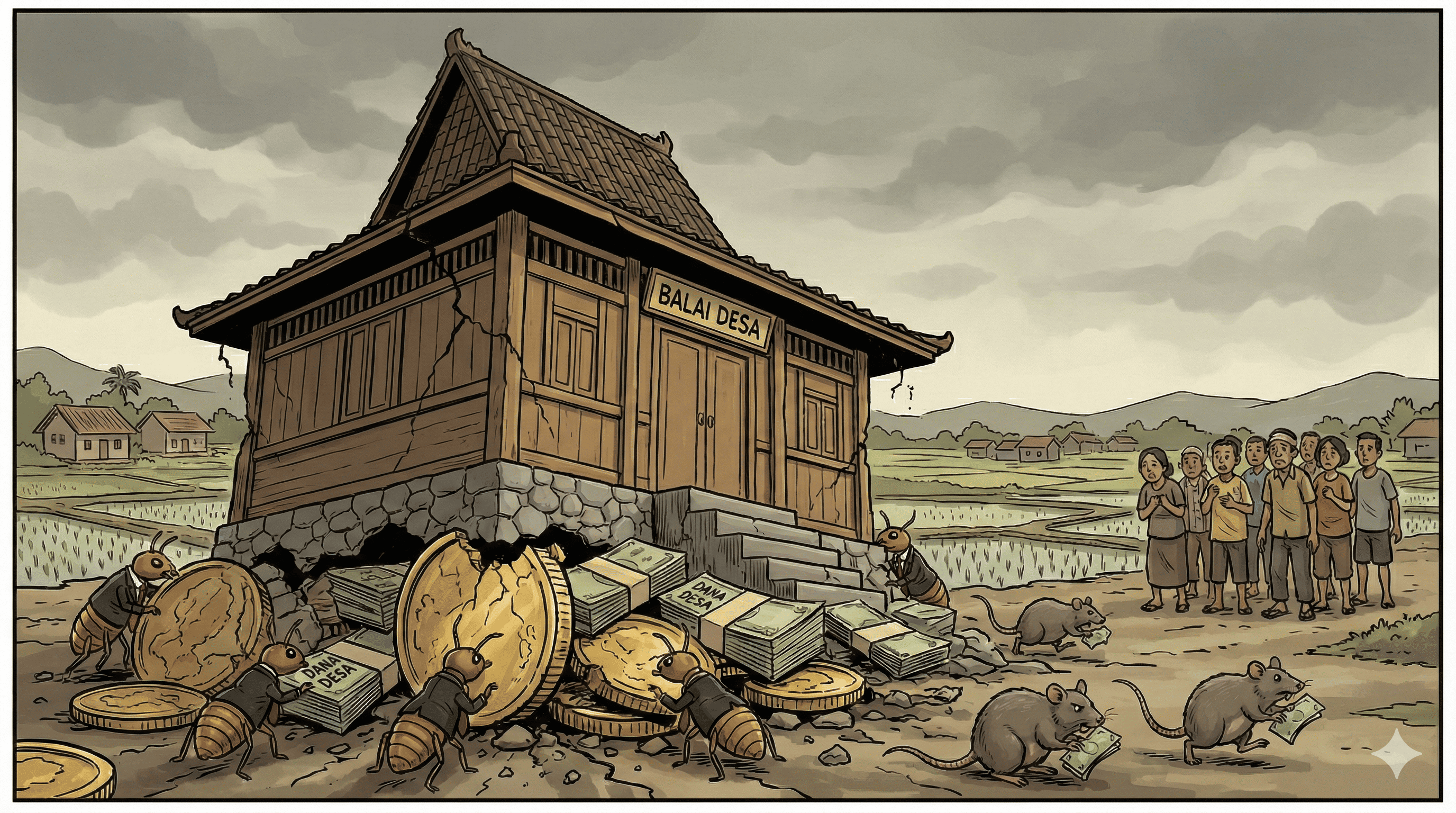
Apakah demikian bisa juga terjadi di pedesaan saat ini? kami akhirnya sepakat boleh jadi demikian juga. Mulusnya jalan desa tak semata perkara perbaikan ekonomi, justru bisa membuka keran bagi investor untuk menguasai lahan petani yang potensial. Bahkan pembangunan infrastruktur termasuk jalan di desa juga cenderung menjadi lahan bagi oknum pemerintah desa untuk menyuburkan laku korupsi.
Hal itu sesuai dengan catatan ICW (Indonesia Corruption Watch) yang menunjukkan, dari kurun waktu 2015 sampai 2017 kasus korupsi di tingkat desa melonjak lebih dari dua kali lipat setiap tahunnya. Total kasus dari kurun waktu tersebut sebanyak 154 kasus. Modusnya pun banyak, mulai dari praktik penyalahgunaan anggaran sebanyak 51 kasus, penggelapan sebanyak 32 kasus, laporan fiktif 17 kasus, kegiatan/proyek fiktif 15 kasus, serta penggelembungan anggaran sebanyak 14 kasus. Total kerugian negara yang diakibatkan sebanyak Rp 47,56 milliar.
Aktornya pun beragam, mulai dari kepala desa, aparat desa sampai anggota keluarga kepala desa. Namun yang paling banyak adalah kepala desa sebanyak 112 orang.
Menihat fenomena tersebut, tidak naif bila kita memanandang pembangunan infrastruktur jalan di desa lebih banyak menguntungkan elit desa dan kelompok kapitalis ketimbang masyarakat kecil. Tidak terkecuali desa di wilayah Sulawesi barat.
Apakah kita mesti menolak pembangunan jalan tersebut? saya kira tidak juga demikian. Jalan boleh saja dibangun, namun harus dibarengi dengan pembangunan sumber daya manusia (SDM) pedesaan. Jangan sampai menjadi timpang karena masyarkat desa yang lemah SDM tak bakal bisa memanfaatkan maksimal infrastruktur jalan tersebut. Sehingga praktik imperialisme terhadap lahan masyarakat tak bisa dihindarkan.
Ada banyak program yang lebih manusiawi yang dapat dibuat dan telah dipraktekkan di sejumlah desa. Misalnya bantuan akses pendidikan formal bagi warga di Desa Ponggok, Kabupaten Klaten, Provinsi Jawa Tengah yang dilakukan oleh pemerintah desa. Program tersebut dikenal dengan nama “1 Rumah 1 Sarjana”. Selain itu, pembuatan Badan Usaha Milikl Desa, terbilang sukses di sana. Badan usaha tersebut berhasil meningkatkan pendapatan desa dan warganya. Desa lainnya sekiranya bisa mencontoh program tersebut. Termasuk bagi desa-desa di Sulawesi Barat.
Mulya Sarmono SH
Advokat dan Penulis






Komentar Untuk Berita Ini (0)
Posting komentar